Common Ants in Ontario Homes: How to Identify and Get Rid of Them
Key Takeaway: Ants can enter Ontario homes in search of food, water, and shelter. Identifying the type of ant, removing food and moisture sources, sealing entry points, and addressing the colony can help prevent recurring ant problems. If ants continue returning despite your efforts, professional ant control can help identify the source and determine an appropriate treatment strategy.
Finding ants inside your home can be frustrating, especially when a few ants quickly turn into a visible trail across your kitchen, bathroom, basement, or other areas of the house.
Ants are common household pests throughout Ontario, particularly during the warmer months. They may enter homes looking for food, water, shelter, or suitable nesting conditions.
However, not every ant problem is the same.
The size, colour, location, and behaviour of the ants can provide clues about what species you are dealing with. This matters because different ant species can require different approaches to control.
From carpenter ants around damp wood to small pavement ants appearing in kitchens, understanding the type of ant and where it is coming from is an important first step toward getting rid of the problem.
Why Are Ants Coming Into Your Home?
Ants are constantly searching for resources that can support their colonies.
A worker ant that finds a reliable food or water source can leave a chemical trail that helps other ants follow the same route. This is why you may see a few ants one day and a much larger trail shortly afterward.
Common reasons ants enter homes include:
Food crumbs and spills
Sugary foods and drinks
Greasy foods
Pet food
Moisture and plumbing leaks
Damp wood
Gaps around windows and doors
Foundation cracks
Openings around pipes and utility lines
Changing outdoor conditions
Even a clean home can experience ant activity if ants can access food, moisture, or shelter.
Common Types of Ants Found in Ontario Homes
Ontario is home to several ant species that can enter or establish colonies around buildings.
Some are primarily nuisance pests, while others can indicate moisture problems or potentially damage wood.
Carpenter Ants
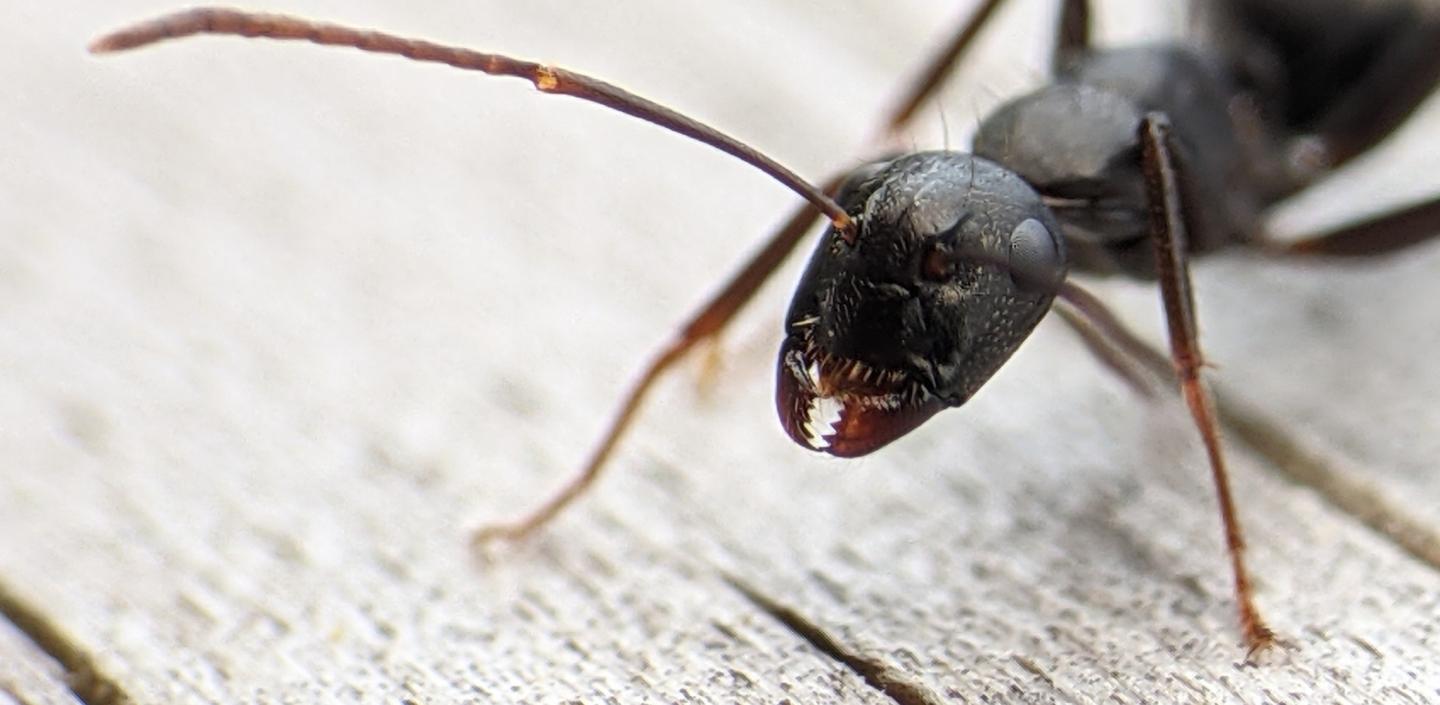
Carpenter ants are among the largest ants commonly found around Ontario homes. They are often black or dark brown, although some species can have reddish-brown colouring.
Carpenter ants do not eat wood. Instead, they excavate wood to create galleries where they can establish nests. The excavated material may appear as sawdust-like debris around the nest.
They commonly prefer damp or damaged wood, although nests can also occur in wall voids, insulation, hollow doors, and other protected areas.
Signs of carpenter ant activity can include:
Large ants appearing repeatedly indoors
Ant activity around windows or doors
Ants near bathrooms or plumbing
Sawdust-like material
Ants coming from wall voids
Activity around damp or damaged wood
Winged ants appearing indoors
If carpenter ants are repeatedly appearing inside your home, it is worth investigating where the colony is located.
Pavement Ants
Pavement ants are small, dark-coloured ants commonly found around sidewalks, driveways, patios, foundations, and other paved areas.
They can enter buildings through small cracks and gaps while searching for food.
Inside homes, they may be found around:
Kitchens
Pantries
Baseboards
Windows
Doorways
Foundations
They are generally considered nuisance pests, but recurring indoor trails can be difficult to eliminate if the colony remains active.
Pharaoh Ants
Pharaoh ants are very small and generally light yellowish to reddish in colour.
They can be particularly challenging to control because colonies can contain multiple queens and may spread when disturbed.
Simply spraying the ants you see may therefore fail to address the underlying colony. The treatment approach should be selected carefully based on the species and circumstances.
Little Black Ants
Little black ants are small, dark-coloured ants that may enter homes looking for food.
They can commonly be found around kitchens, food storage areas, windows, and other places where they can locate accessible food sources.
Because several small ant species can look similar, accurate identification can be difficult without examining the ants closely.
Odorous House Ants
Odorous house ants are small ants that can enter buildings while searching for food.
They may establish nests in protected areas around or inside structures and can create noticeable trails when a reliable food source is available.
As with other small household ants, identifying the species can help determine the most appropriate control strategy.
Other Ants You May Encounter
Ontario homes can also encounter other ant species, including thief ants and citronella ants.
Not every ant found around a property indicates an indoor infestation. Some species primarily live outdoors and may occasionally wander indoors.
This is why where you are finding the ants can be just as important as what they look like.
Ant Identification: What Should You Look For?
If you want to determine what type of ant you have, start by observing a few basic characteristics.
Size
Ants can range from extremely small species to much larger carpenter ants.
A noticeably large ant inside your home, especially if you see them repeatedly, may warrant further investigation.
Colour
Look at the overall colour of the ant.
Common colours include:
Black
Dark brown
Reddish-brown
Yellowish
Light brown
Colour alone is not enough for reliable identification, but it can provide a useful clue.
Location
Where you find the ants can help narrow down the possibilities.
For example:
Kitchen: food-seeking ants are common
Bathroom: moisture may be contributing to activity
Basement: moisture, cracks, and shelter may be factors
Around windows: entry points or moisture may be involved
Around foundations: outdoor colonies may be nearby
Near damaged wood: carpenter ants should be considered
Behaviour
Pay attention to how the ants move.
A consistent trail often indicates that workers have established a route to a food or water source.
If you repeatedly see ants emerging from the same crack, wall opening, or structural area, there may be a nest or entry point nearby.
Quick Guide to Common Ants in Ontario
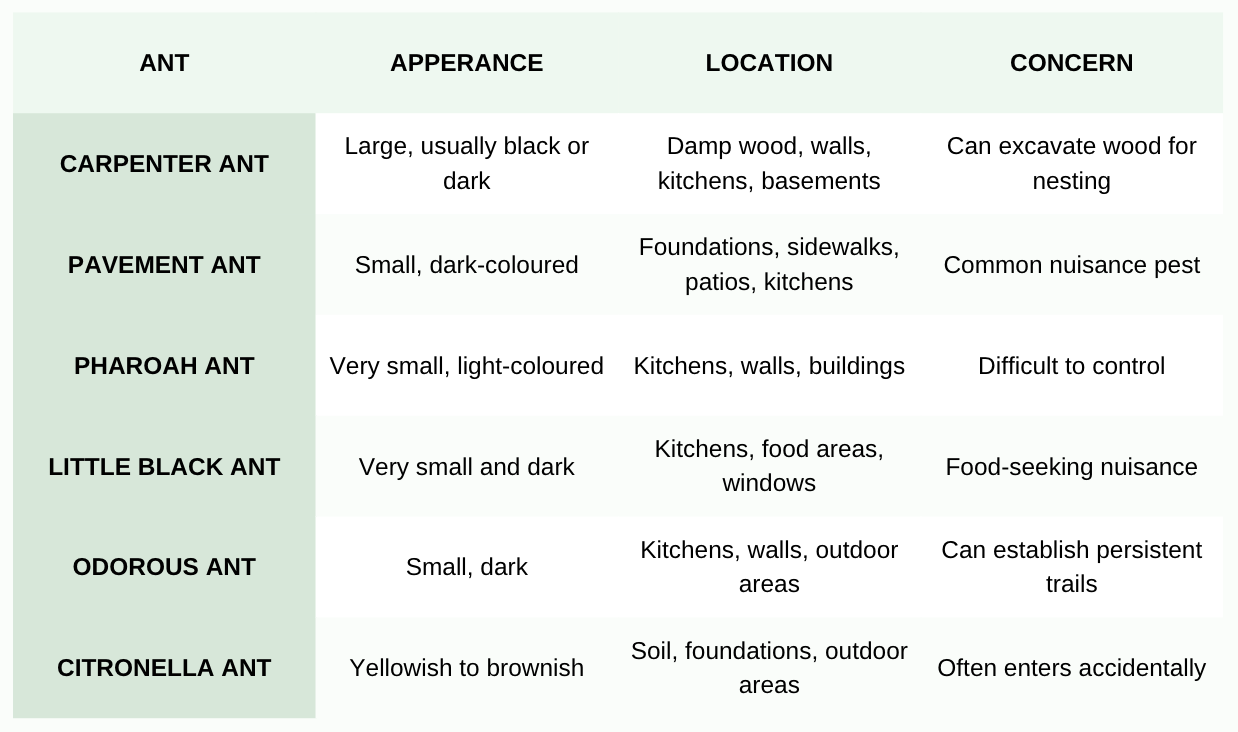
Keep in mind: appearance can vary between species, and some ants can look very similar. If you are unsure what type of ant you are seeing, professional identification can help.
How to Tell if You Have an Ant Infestation
Seeing one or two ants does not necessarily mean you have a major infestation.
However, recurring activity may indicate that ants have established a reliable route or that a colony is located nearby.
Watch for:
Ant trails appearing repeatedly
Large numbers of ants indoors
Ants returning after cleaning
Ants appearing in multiple rooms
Ants emerging from cracks or wall openings
Ants appearing around plumbing or moisture
Large ants repeatedly appearing indoors
Sawdust-like material near carpenter ant activity
Winged ants inside the home
If the activity continues day after day, it is worth investigating the source rather than simply killing the ants you can see.
Why Do Ants Keep Coming Back After You Spray Them?
One of the most common frustrations homeowners experience is seeing ants return after using a store-bought spray.
The reason is simple: the ants you see may only be a small part of the colony.
Killing visible workers does not necessarily eliminate the nest or queen. Other workers can continue following established trails into the home.
Health Canada also notes that treatment strategies need to account for the biology and behaviour of the species involved. For some ants, baiting can be useful because workers carry food back to the colony, while indiscriminate spraying can interfere with bait-based control.
This is why identifying the ant and understanding where the colony is located can be more useful than repeatedly spraying individual ants.
How to Prevent Ants From Entering Your Ontario Home
You can reduce the likelihood of ant problems by making your property less attractive and limiting access.
1. Keep Food Areas Clean
Wipe counters regularly and clean up crumbs and spills quickly.
Store food in sealed containers and avoid leaving sugary foods or drinks exposed.
Pet food can also attract ants, so avoid leaving food out longer than necessary.
2. Reduce Moisture
Repair leaking pipes and address moisture around:
Sinks
Bathrooms
Basements
Windows
Foundations
Moisture can create favourable conditions for certain ants, particularly carpenter ants that prefer damp or decaying wood.
3. Seal Cracks and Gaps
Inspect the exterior of your home for potential entry points.
Pay particular attention to:
Foundation cracks
Window frames
Door frames
Utility lines
Pipes
Vents
Garage doors
Sealing accessible openings can help prevent ants from entering.
4. Keep Vegetation Away From the Structure
Trim branches and vegetation that touch the exterior of your home.
Trees, shrubs, and other vegetation can provide pathways for ants and other insects to reach the structure.
5. Remove Damaged or Decaying Wood
If you have old stumps, rotting wood, or damp lumber close to your home, consider removing or replacing it.
This is especially important when dealing with carpenter ants, which commonly nest in damp or decaying wood.
6. Keep Firewood Away From the Home
Avoid storing firewood directly against your house.
Firewood can provide shelter for ants and other insects and may provide a pathway toward the structure.
When Are Ants Most Active in Ontario?
Ant activity can occur throughout the year, but homeowners generally notice more activity during the warmer months.
As temperatures rise in spring, ants become more active and colonies begin searching for food and resources.
During summer, established colonies can produce noticeable trails around homes and properties.
If you are seeing ants indoors repeatedly, don't assume the problem will disappear when the weather changes. An established colony may continue using the same building or surrounding area.
Are Carpenter Ants Dangerous to Your Home?
Carpenter ants can be more concerning than many other household ant species because they excavate wood to create nesting galleries.
They do not eat the wood, but their tunnelling can damage or weaken wood over time, particularly when colonies are associated with damp or already damaged material.
If you repeatedly find large ants inside your home, especially near moisture or damaged wood, it is worth having the activity investigated.
When Should You Call a Professional for Ant Control?
Professional pest control may be appropriate if:
Ants continue returning after cleaning
You see large numbers of ants
Ant trails appear repeatedly
Ants are coming from walls or other hidden areas
You repeatedly see large carpenter ants
You notice sawdust-like debris
Ant activity occurs in several rooms
You cannot determine where the ants are coming from
DIY treatments have not resolved the problem
A professional inspection can help identify the species, determine likely entry points, and locate areas where a colony may be established.
How Professional Ant Control Can Help
Effective ant control is not always about treating the ants that are easiest to see.
A professional approach can include:
Identifying the ant species
Inspecting interior and exterior areas
Tracing ant trails
Looking for potential nesting locations
Identifying moisture issues
Checking entry points
Selecting an appropriate treatment strategy
Addressing conditions that may contribute to recurring activity
The correct approach depends on the species, colony location, and conditions around the property.
Ants in Brampton, Mississauga and Across Southern Ontario
Ant problems can occur throughout Southern Ontario, including Brampton, Mississauga, Vaughan, Milton, Oakville, Burlington, Hamilton, and surrounding communities.
Homes with gardens, mature trees, decks, garages, damp areas, and accessible entry points can provide suitable conditions for ants.
If you are seeing recurring ant trails inside your home, identifying the source early can help prevent the problem from becoming more difficult to manage.
For more information about preventing household pest problems, read our guide on How to Prevent Common Household Pests in Ontario.
Don't Let a Small Ant Problem Become a Recurring One
Finding a few ants inside your home does not always mean you have an infestation.
However, repeated trails, large numbers of ants, or recurring activity from the same areas can indicate that ants have found a reliable food source or that a colony is established nearby.
Cleaning food areas, reducing moisture, sealing entry points, and maintaining the exterior of your home can all help reduce ant activity.
If the ants keep coming back, professional pest control can help identify the species and determine where the activity is coming from.
If you're dealing with recurring ants in your home or business, First Choice Pest Control Inc. can inspect the property and recommend an appropriate treatment based on the pest activity.
Frequently Asked Questions About Ants in Ontario
What is the most common type of ant found in Ontario homes?
There isn't one single ant species found in every Ontario home. Carpenter ants, pavement ants, little black ants, pharaoh ants, and other household ants can enter buildings depending on the location and conditions around the property.
How can I tell what type of ant I have?
Look at the ant's size, colour, body shape, location, and behaviour. However, several species can look similar, so professional identification may be necessary for an accurate determination.
Why are ants suddenly appearing in my kitchen?
Ants may enter kitchens because they have found accessible food or water. Crumbs, spills, sugary foods, pet food, and moisture can all attract foraging ants.
Why do ants keep coming back after I kill them?
Killing individual worker ants does not necessarily eliminate the colony. If the nest remains active, additional workers can continue following established trails into your home.
Can carpenter ants damage my house?
Yes. Carpenter ants excavate wood to create nesting galleries. They do not eat wood, but prolonged activity can contribute to damage, particularly when colonies are associated with damp or decaying wood.
What is the difference between carpenter ants and pavement ants?
Carpenter ants are much larger and are often associated with wood, particularly damp or damaged wood. Pavement ants are much smaller and are commonly found around foundations, sidewalks, patios, and other paved areas.
Are ants dangerous?
Most ants commonly found in Canadian homes are not dangerous to people. However, some species can sting, and carpenter ants can cause damage to wood.
Should I spray ants when I see them?
Spraying visible ants may kill individual workers but may not eliminate the colony. The appropriate control method depends on the species and location of the infestation.
How do I keep ants out of my house?
Keep food sealed, clean spills and crumbs, reduce moisture, seal cracks and gaps, maintain vegetation around the home, and remove damp or decaying wood where possible.
When should I call pest control for ants?
Consider professional help if ants continue returning, trails appear repeatedly, you see large numbers of ants, carpenter ants are present, or you cannot determine where the ants are coming from.
Need Professional Ant Control in Ontario?
Recurring ant activity can be frustrating, especially when the ants keep returning after you clean or spray them.
First Choice Pest Control Inc. provides professional ant control services across Southern Ontario. Our team can inspect the property, identify the source of the activity, and recommend an appropriate treatment strategy.
Contact First Choice Pest Control Inc. today to schedule an inspection or learn more about ant control services.
Dealing with a pest problem?
Our licensed technicians offer same-day service backed by a 100% satisfaction guarantee.