Cluster Flies in Ontario: Why They Enter Homes and How to Keep Them Out
Key Takeaway: Cluster flies can become a common nuisance in Ontario homes during late summer, fall, and winter. They enter buildings through small cracks and openings while looking for protected places to overwinter. If you're finding cluster flies around windows, walls, attics, or other areas of your home, sealing entry points and addressing the source of the activity can help prevent them from becoming a recurring problem.
Finding several slow-moving flies around your windows or walls can be confusing, especially when you haven't noticed a fly problem during the warmer months.
If you've been wondering, "Why are cluster flies in my house?", the timing may provide an important clue.
In Ontario, cluster flies begin looking for protected places to spend the winter as summer comes to an end and temperatures start to drop. They can enter homes through very small cracks and openings and may gather in wall voids, attics, closets, and other sheltered areas.
The problem may become more noticeable when temperatures rise because the flies become active and move toward windows and other light sources.
Understanding why cluster flies enter homes and where they hide can help you take steps to prevent repeated activity.
What Are Cluster Flies?
Cluster flies are larger than many common household flies and are generally dark grey in colour.
They are usually around 8 to 10 mm long and may have a checkered appearance on the abdomen. Their wings also overlap when they are resting.
Cluster flies can sometimes be mistaken for house flies or other flying insects.
One of the easiest ways to distinguish them is their behaviour.
Cluster flies are often slower-moving than house flies and may gather around windows or sunny areas of a home when they become active.
Unlike some other household flies, cluster flies do not breed inside homes. Their larvae develop outdoors and are associated with earthworms.
Why Are Cluster Flies Coming Into My House?
Cluster flies enter homes primarily because they are looking for a protected place to overwinter.
As the days become shorter and temperatures begin to fall in late summer and early fall, adult cluster flies start searching for shelter. They may be attracted to warm, sunny sides of buildings and can eventually find small openings around the exterior.
Some common entry points include:
Cracks around windows
Gaps around doors
Openings around siding
Gaps under eaves
Soffit openings
Cracks around the foundation
Unsealed openings around the building exterior
Damaged screens
Once inside, cluster flies may move into protected areas such as wall voids and attics.
Why Do I See Cluster Flies in the Fall?
Fall is one of the most noticeable times for cluster fly activity in Ontario.
As outdoor temperatures become cooler, cluster flies begin searching for sheltered areas where they can spend the winter.
Buildings can provide exactly what they are looking for.
They may enter through tiny openings and settle inside wall voids, attics, closets, and other secluded areas.
This means that seeing cluster flies in your home during the fall does not necessarily mean they have suddenly started breeding inside.
In many cases, they are entering the building to find a protected overwintering location.
Where Do Cluster Flies Hide?
Cluster flies can remain hidden for extended periods.
Common areas where they may gather include:
Attics
Wall voids
Around windows
Closets
Unused rooms
Behind walls
Around exterior walls
Areas near rooflines
Other protected spaces
They may remain inactive during colder periods.
When temperatures increase, the flies can become active again and may move toward warmer or brighter areas of the home.
This is why homeowners sometimes notice cluster flies around windows on sunny days during the colder months.
Why Are Cluster Flies Around My Windows?
If you're seeing cluster flies around your windows, it may be because they are becoming active inside the building and moving toward light.
On warmer days, cluster flies may emerge from their sheltered locations and gather around windows.
You may notice:
Several flies on window glass
Flies around window frames
Flies near sunny walls
Flies appearing suddenly on warmer days
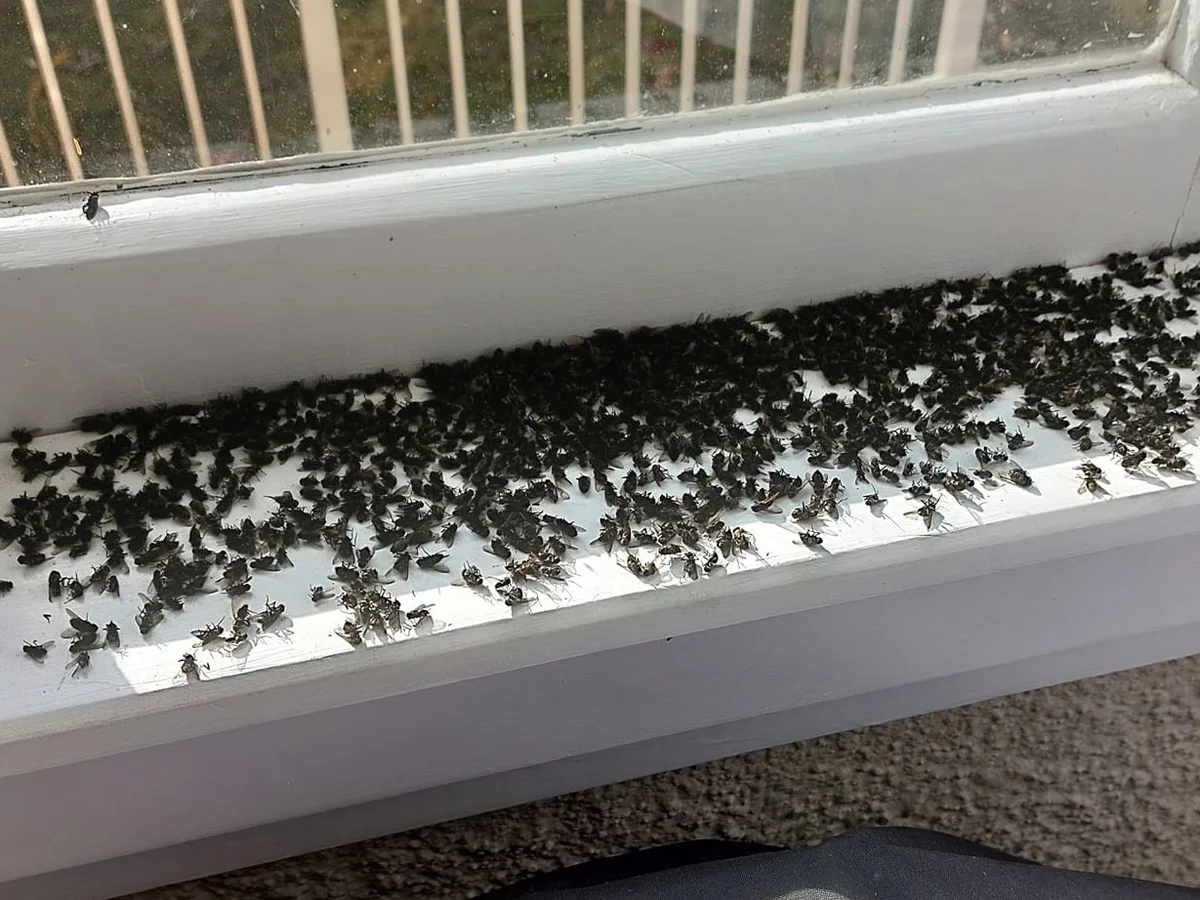
Dead flies accumulating near windows
Seeing several flies in the same area can indicate that they are emerging from a nearby hiding location.
Are Cluster Flies a Sign of a Dirty House?
No.
Cluster flies are not generally associated with poor cleanliness.
They enter buildings because they are looking for shelter and suitable overwintering locations.
A clean and well-maintained home can still experience cluster fly activity if there are cracks, gaps, or other entry points around the exterior.
This is different from some other flies that may be attracted to food, garbage, drains, or organic material.
If you're dealing with a different type of fly problem, our guide on How to Prevent Common Household Pests in Ontario provides additional information about reducing conditions that attract common household pests.
Are Cluster Flies Dangerous?
Cluster flies are generally considered a nuisance pest rather than a significant health threat.
They do not typically bite people, and they do not reproduce inside homes.
However, a large number of cluster flies can still be frustrating for homeowners.
They may gather around windows, walls, and other areas of the home and can leave stains on surfaces if they are crushed. Dead insects can sometimes attract other pests, particularly if they accumulate in hidden areas.
For this reason, repeated cluster fly activity should not simply be ignored.
How Can You Prevent Cluster Flies?
The most effective long-term approach is to reduce the opportunities cluster flies have to enter your home.
Seal Cracks and Gaps
Inspect the exterior of your home for small openings.
Pay particular attention to:
Window frames
Door frames
Siding
Eaves
Soffits
Foundation areas
Utility openings
Other exterior gaps
Sealing potential entry points can help reduce the number of cluster flies that are able to enter the building.
Check Window Screens
Make sure window screens are properly fitted and do not have holes or damaged areas.
Even a small opening can provide an opportunity for insects to enter.
Weatherstrip Doors and Windows
Check the seals around exterior doors and windows.
Damaged weatherstripping can create gaps that allow insects to enter the home.
Replacing worn seals can help improve the building's overall protection against pests.
Inspect Soffits and Eaves
Cluster flies can enter buildings through openings around rooflines, soffits, and eaves.
These areas can be difficult for homeowners to inspect safely, particularly on multi-storey homes.
If you notice repeated activity around the upper exterior of your home, a professional inspection may help identify potential entry points.
Can You Get Rid of Cluster Flies With a Vacuum?
Vacuuming can be useful for removing cluster flies that are already inside the home.
If you see a small number of flies around windows, carefully vacuuming them can help remove the visible insects.
However, vacuuming does not address the entry points or hidden areas where other flies may remain.
If cluster flies continue appearing, it is important to determine how they are entering the building and where they may be gathering.
Why Do Cluster Flies Keep Coming Back?
If you're repeatedly seeing cluster flies, there may be accessible entry points around the building.
The flies may also be emerging from areas where they previously entered and overwintered.
Simply removing the flies you can see may provide temporary relief, but it does not necessarily prevent new activity.
For recurring cluster flies in a house, prevention should focus on identifying and addressing the conditions that allow them to enter.
When Should You Call a Pest Control Professional?
Occasional fly activity may not require professional treatment.
However, you may want to consider a professional inspection if:
You're seeing large numbers of cluster flies.
Flies continue appearing after being removed.
Cluster flies are appearing in multiple rooms.
You find flies around windows repeatedly.
You suspect they are coming from wall voids or the attic.
You cannot identify where they are entering.
The problem returns every year.
A professional inspection can help determine where the activity is occurring and whether there are accessible entry points around the building.
Are Cluster Flies Common in Ontario?
Yes.
Cluster flies can be found in homes and buildings throughout Ontario, particularly during the fall when they begin searching for protected places to overwinter.
Homes surrounded by open areas or large lawns may experience noticeable activity because cluster fly larvae develop outdoors in association with earthworms.
This means homeowners across Southern Ontario may notice cluster flies entering homes as the weather changes.
Whether you're seeing cluster flies in Toronto, Brampton, Mississauga, or another Ontario community, addressing entry points early can help reduce future activity.
What Is the Difference Between Cluster Flies and House Flies?
Cluster flies and house flies can look similar at first glance, but there are some differences.
Cluster flies are generally larger, darker, and slower-moving than typical house flies. They also tend to gather around windows and sheltered areas when they become active.
Most importantly, cluster flies do not breed inside homes, while other types of flies may breed around garbage, food waste, drains, or other organic material.
Correct identification is important because the source and control strategy can be different.
Frequently Asked Questions
Why are cluster flies suddenly appearing in my house?
Cluster flies may become noticeable when they enter buildings in late summer and fall looking for protected places to overwinter. They can remain hidden and become active again when temperatures rise.
Do cluster flies breed inside the house?
No. Cluster flies do not normally breed inside homes. Their larvae develop outdoors and are associated with earthworms.
Why are cluster flies around my windows?
Cluster flies may become active when temperatures rise and move toward windows and other light sources. This can make their presence particularly noticeable on sunny days.
Can cluster flies damage my home?
Cluster flies do not generally damage the structure of a home. However, large numbers can become a nuisance, and dead flies inside wall voids may attract other insects.
How do I get rid of cluster flies?
Removing visible flies, sealing cracks and gaps, repairing screens, and addressing potential entry points can help. If activity continues, professional pest control may be appropriate.
Are cluster flies the same as house flies?
No. Cluster flies are a different type of fly and are generally larger, darker, and slower-moving. They also have different habits and do not breed inside homes.
Why do I get cluster flies every year?
If cluster flies return each year, the building may have accessible entry points that allow them to enter and overwinter. Identifying and sealing these areas can help reduce recurring activity.
Are cluster flies dangerous?
Cluster flies are generally considered nuisance pests and are not usually a significant health concern. However, large numbers inside a home can still be unpleasant and difficult to manage.
Need Professional Cluster Fly Control?
Cluster flies can become difficult to control when they repeatedly enter through small openings and settle inside walls, attics, or other protected areas.
At First Choice Pest Control Inc. we provide professional pest control services for homeowners, landlords, property managers, and commercial properties throughout Southern Ontario.
If you're seeing cluster flies in your home, identifying how they are entering can be an important part of preventing repeated activity.
Contact First Choice Pest Control Inc. today to discuss your situation and arrange a professional inspection.
Dealing with a pest problem?
Our licensed technicians offer same-day service backed by a 100% satisfaction guarantee.