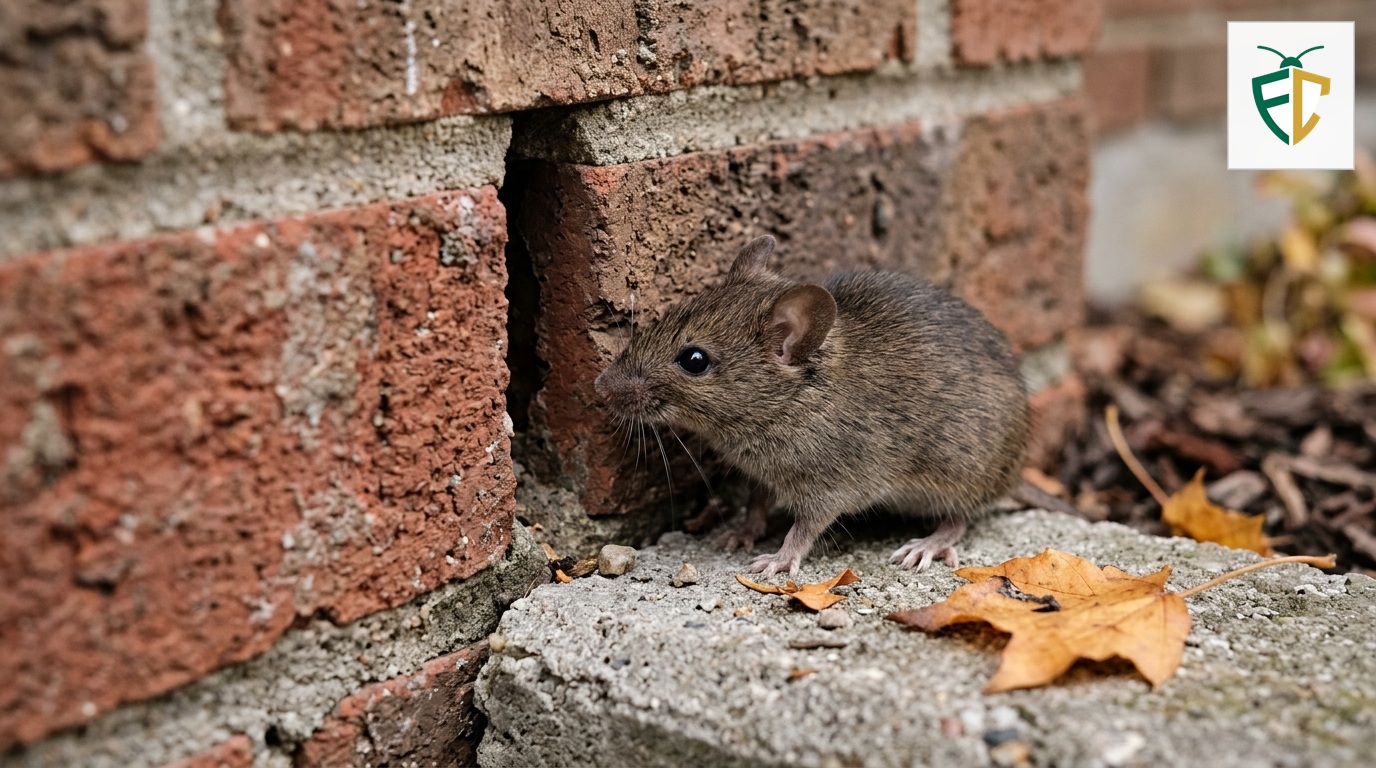
Mice vs Rats: How to Tell the Difference in Your Ontario Home

Key Takeaway: Mice and rats can both enter Ontario homes looking for food, shelter, and nesting areas, but there are several ways to tell them apart. The easiest clue is usually their droppings — mouse droppings are small and rice-sized, while rat droppings are much larger and bean-shaped. Mice are also significantly smaller and can squeeze through openings around 6 mm, while rats need larger entry points. If you're finding droppings, hearing scratching, or noticing gnaw marks around your home, identifying whether you have mice or rats is the first step toward choosing the right rodent control solution.
Mice vs Rats: What's the Difference?
Finding a rodent inside your home can be unsettling, especially when you aren't sure what you're dealing with.
At first glance, mice and rats may seem similar. Both are rodents, both are primarily active at night, and both can enter homes through openings around the building.
However, mice and rats are different in size, behaviour, entry points, and the type of damage they can cause.
Knowing the difference can help you identify the source of the activity and determine when professional pest control may be needed.
Mice vs Rats at a Glance

Ontario government guidance confirms that mice and rats have different physical characteristics, entry requirements, and behaviours, which is important when determining the appropriate rodent-control strategy.
What Do Mouse Droppings Look Like?
Mouse droppings are one of the easiest signs to identify.
They are generally:
Small
Dark in colour
Similar in size to grains of rice
Narrow and elongated
Often pointed at the ends
You may find mouse droppings in areas such as:
Kitchen cabinets
Under sinks
Behind appliances
Along baseboards
Inside pantries
Around food storage areas
In garages
In attics or wall voids
If you are finding small droppings repeatedly throughout your home, there may be more than one mouse present.
What Do Rat Droppings Look Like?
Rat droppings are considerably larger than mouse droppings.
They are generally:
Dark in colour
Much larger than mouse droppings
Similar in size to beans
Thicker and heavier
Often found along established travel routes
Rat droppings may be found in:
Basements
Garages
Crawl spaces
Around foundations
Storage areas
Near food sources
Along walls and other travel routes
As a general rule, rice-sized droppings suggest mice, while bean-sized droppings suggest rats. Ontario's guidance specifically identifies droppings as one of the simplest ways to distinguish between the two.
How Big Are Mice Compared to Rats?
The size difference between mice and rats is significant.
A typical house mouse is small enough to fit comfortably in the palm of your hand. Rats are considerably larger, with heavier bodies and thicker tails.
Mice also have relatively large ears compared with their heads and a more pointed appearance.
Rats have:
Larger bodies
Thicker tails
Larger feet
A more robust build
A blunter overall appearance
If you only catch a quick glimpse of the animal, its size and body shape can provide an important clue.
Can Mice and Rats Get Through Small Holes?
Yes. This is one of the biggest reasons rodents can be difficult to keep out of a home.
A mouse can squeeze through an opening of approximately 6 mm, which is around the width of a pencil. Rats generally require a larger opening.
Potential entry points can include:
Gaps around doors
Foundation cracks
Garage doors
Roofline openings
Utility penetrations
Gaps around pipes
Damaged vents
Openings around siding
Gaps around windows
Damaged soffits
A small opening on the exterior can become an easy access point into your home.
Where Do Mice Usually Hide?
Mice are excellent at finding small, protected spaces.
Inside a home, they may nest:
Behind refrigerators
Behind stoves
Inside cabinets
Inside wall voids
Under sinks
Around stored materials
Inside attics
Near insulation
Behind appliances
Mice typically stay relatively close to their nesting area and food sources. Ontario guidance notes that mice generally travel much shorter distances from their nests than rats.
This means finding droppings in your kitchen, for example, can help narrow down where the activity may be coming from.
Where Do Rats Usually Hide?
Rats generally require more space than mice and can establish themselves in areas such as:
Basements
Crawl spaces
Garages
Foundation areas
Exterior burrows
Garbage areas
Sheds
Commercial storage areas
Areas near food and water
Rats can also travel through larger openings and may move between outdoor and indoor environments.
If you are seeing signs of rats around the exterior of your property, the source may not be inside the house itself.
Do Mice and Rats Make Different Sounds?
Both mice and rats can make scratching, scurrying, and gnawing sounds.
You may notice activity:
Inside walls
Above ceilings
In attics
Behind appliances
Around cabinets
In basements
Near stored materials
Mice generally produce lighter movement sounds because of their smaller size.
Rats can produce noticeably heavier scratching or movement noises.
Hearing sounds at night does not necessarily tell you which rodent you have, but it can be an important sign that further inspection is needed.
What Are the Signs of a Mouse or Rat Infestation?
You don't always have to see a rodent to know that one is present.
Common signs include:
Droppings
Scratching sounds
Gnaw marks
Damaged food packaging
Shredded nesting material
Grease or rub marks
Unusual odours
Rodent activity at night
Holes or gaps around the exterior
Repeated sightings
Gnaw Marks
Both mice and rats constantly gnaw because their front teeth continue growing.
You may find gnaw marks on:
Food packaging
Wood
Plastic
Insulation
Wiring
Stored materials
Rodent damage to electrical wiring is particularly concerning because damaged wiring can create a potential fire hazard.
Are Mice or Rats More Dangerous?
Neither should be ignored.
Both mice and rats can contaminate food and surfaces with urine, droppings, and other biological material. They can also damage property by chewing materials and electrical wiring.
Rats are larger and can cause more significant physical damage, while mice can enter extremely small openings and reproduce quickly.
Ontario guidance notes that both species have substantial breeding potential, which is one reason a small rodent problem can become much larger if it is left untreated.
Do Mice and Rats Live in the Same House?
They can, although the presence of one does not necessarily mean you have the other.
If you're finding different types of droppings or seeing rodents in multiple areas of the property, professional identification can help determine what species are actually present.
This is important because mice control and rat control may require different approaches based on the size, behaviour, entry points, and location of the rodents.
Can You Get Rid of Mice or Rats Yourself?
Some homeowners try to control rodents using traps, store-bought products, or by sealing visible gaps.
These measures may help in certain situations, but they don't always address the source of the problem.
The most important questions are:
Where are the rodents coming from?
Where are they nesting?
How are they getting inside?
Are there additional entry points that haven't been noticed?
A professional inspection can help identify the source of activity and determine the appropriate treatment.
How Professional Rodent Control Works
Professional rodent control should address more than the rodents you happen to see.
At First Choice Pest Control, an inspection can help identify:
Active rodent areas
Dropping locations
Potential entry points
Nesting areas
Signs of gnawing
Interior activity
Exterior access points
Treatment can then be recommended based on the type and extent of rodent activity.
Where appropriate, rodent control may include treatment, monitoring, and sealing potential entry points to help prevent rodents from returning.
The goal is not simply to remove the rodent you see.
The goal is to address the conditions allowing rodents to enter and remain on the property.
How to Prevent Mice and Rats in Your Ontario Home
There are several things homeowners can do to reduce the likelihood of rodent activity.
1. Seal Exterior Gaps
Inspect the exterior of your home for cracks, gaps, and openings around the foundation, doors, pipes, vents, and roofline.
Remember that mice can enter through extremely small openings.
2. Store Food Properly
Keep food in sealed containers and clean up crumbs and spills promptly.
Don't leave pet food sitting out overnight if rodents are an ongoing concern.
3. Keep Garbage Secure
Garbage and food waste can provide an easy food source for rodents.
Use secure garbage containers and keep waste areas clean.
4. Reduce Outdoor Clutter
Stacks of materials, excessive vegetation, and clutter around the property can provide rodents with shelter.
Keeping areas around the foundation clear can make inspection and prevention easier.
5. Address Water Sources
Rodents need access to water.
Repair leaks and address standing water around the property where possible.
As fall approaches, it's especially important to inspect your home for potential entry points. Read our guide on How to Keep Mice Out of Your Ontario Home Before Fall for more practical prevention tips.
When Should You Call a Pest Control Professional?
Consider contacting a professional if you:
See a mouse or rat inside your home
Find repeated droppings
Hear scratching in walls or ceilings
Find gnaw marks
Notice damaged food packaging
Discover nesting material
See rodents repeatedly around your property
Find possible entry points
Have tried DIY control without success
Don't wait for the problem to become larger before addressing it.
Professional Mice and Rat Control in Ontario
If you're dealing with mice, rats, or other rodents, First Choice Pest Control Inc. can help identify the source of the activity and determine the appropriate treatment.
Our technicians can inspect your property for signs of rodent activity, identify potential entry points, and provide professional mice and rat control services.
Whether you're hearing scratching in the walls, finding droppings in your kitchen, or seeing rodents around your home, addressing the problem early can help prevent a larger infestation.
Contact First Choice Pest Control Inc. to schedule an inspection.
Serving customers throughout Southern Ontario and the GTA.
Frequently Asked Questions
How can I tell if I have mice or rats?
The easiest clue is usually the droppings. Mouse droppings are small and rice-sized, while rat droppings are much larger and bean-sized. The size of the animal, type of damage, and location of activity can provide additional clues.
Are mouse droppings smaller than rat droppings?
Yes. Mouse droppings are significantly smaller than rat droppings. Ontario guidance describes mouse droppings as rice-sized and rat droppings as bean-sized.
Can mice fit through smaller holes than rats?
Yes. Mice can squeeze through openings around 6 mm, while rats generally require larger openings.
What is worse, mice or rats?
Both can create health and property concerns. Rats are larger and can cause more extensive physical damage, while mice can enter very small openings and reproduce quickly.
Do mice and rats come out during the day?
Both are primarily nocturnal, although you may occasionally see them during daylight hours. Daytime sightings can be a sign of significant activity, but a professional inspection is the best way to determine the extent of the problem.
Can mice and rats damage electrical wiring?
Yes. Both mice and rats can gnaw on electrical wiring and other materials. If you notice damaged wiring or signs of rodents near electrical components, have the issue assessed promptly.
How do mice and rats get into houses?
Rodents can enter through gaps around foundations, doors, pipes, vents, siding, garages, rooflines, and other openings. Mice can use extremely small openings, making a thorough exterior inspection important.
Dealing With Mice or Rats?
Don't wait for a few droppings or one sighting to become a larger rodent problem.
First Choice Pest Control Inc. can inspect your property, identify signs of mice or rats, and recommend the appropriate control solution.
Call 1-888-407-PEST to schedule an assessment.
Dealing with a pest problem?
Our licensed technicians offer same-day service backed by a 100% satisfaction guarantee.